Hearth and Hamlet Buildings Tier List
Unlock priority for tents through academies during demo and early-kingdom play.
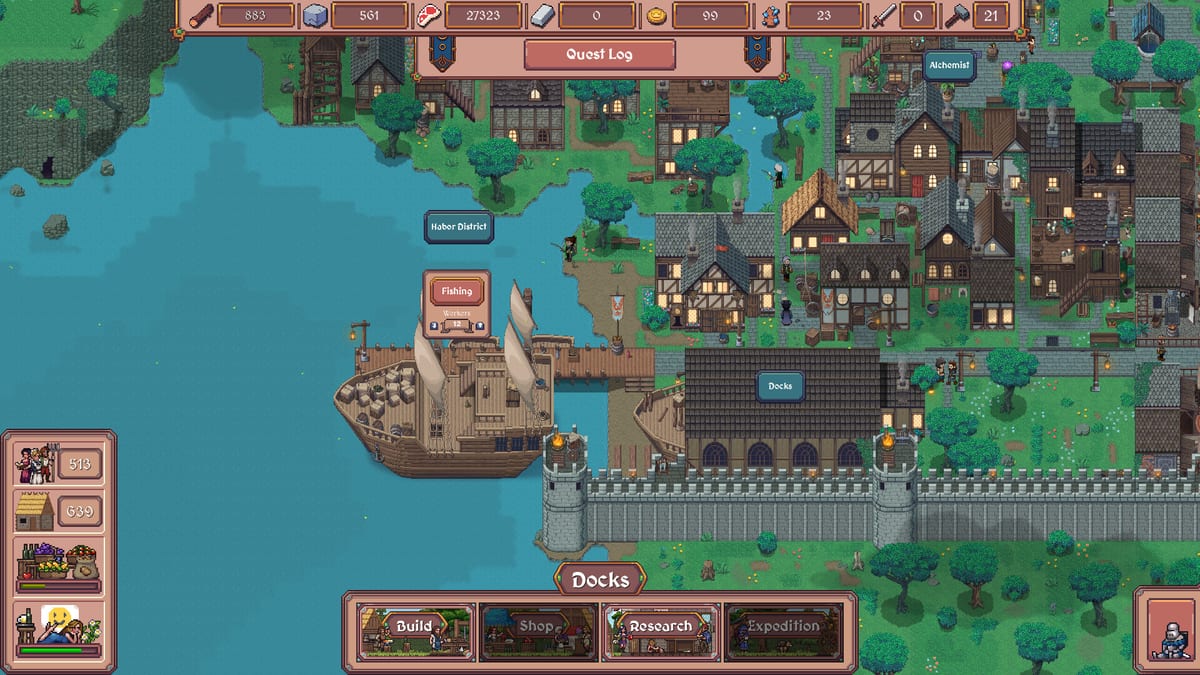
This buildings tier list ranks unlock and construction priority for Hearth and Hamlet after the August 19, 2026 Steam release. Rankings still start from early and mid progression: keep the camp fed, timbered, and defended before chasing prestige structures. Pair this page with the buildings systems overview, resources, and workers tier list.
Hearth and Hamlet’s building fantasy stretches from simple tents to taverns, fortifications, and magical academies. The demo lets you feel that ladder without implying every late castle is in the free sample. Use tiers as decision support when stone and gold are scarce.
Tier criteria
- S: Unlocks or upgrades that immediately stabilize food, housing, or core gathering.
- A: Strong mid-camp production and civic hubs that multiply worker value.
- B: Defense, happiness, and quality-of-life structures that matter once raids or morale appear.
- C: Situational or luxury buildings that shine after basics are online.
- D: Delay until storage, research, or gold income can actually use them.
S tier — early survival spine
Tents and basic housing
Population is the engine. Early tents (and whatever humble shelters the demo offers first) keep new workers sleeping somewhere other than the dirt. Prioritize housing whenever growth stalls even if a fancy civic building is glowing in the unlock list. Empty beds with no food still fail; full beds with no jobs waste growth—so staff gatherers the same day you place tents.
Fishing and early food buildings
Food is the soft fail state of cozy citybuilders. Fishing huts and other early food structures belong in S tier because a starving camp cannot research, tax, or trade its way out of a death spiral. If wood is short, still favor the cheapest food building over decorative civic upgrades. Cross-check stockpile behavior on the resources page so you know when storage—not production—is the real bottleneck.
Woodcutter
Almost every early building drinks wood. A woodcutter (or equivalent lumber camp) is S tier the moment you can assign even a small crew. Manual hold-to-gather clicks can bridge gaps—see controls—but sustained construction needs automated wood income. Do not race stone buildings while timber income is still click-dependent.
A tier — mid demo production core
Quarry and stone production
Once tents and wood loops are stable, stone becomes the mid-game gate. Quarries leap to A tier because civic halls, guard posts, and heavier structures lean on masonry. Build stone capacity before you promise yourself a skyline of fortifications. If stone piles while wood hits zero, reassign workers using the worker planner.
Public house
The public house sits at the intersection of civic life and happiness. In mid progression it is A tier: not as urgent as food on day one, but essential once policies and population density make morale matter. Happier settlements produce better and tolerate taxation more gracefully—details live on policies.
Chief house / leader residence
Leadership buildings (chief house, leader’s hut, manor-style upgrades depending on demo language) often gate advisors, research quality-of-life nodes, or policy depth. Rank them A once basic production exists. Building a chief house while the camp is starving is a classic demo trap; building it immediately after food and wood stabilize is usually correct.
B tier — defense and social buffers
Guard house
Raids and hostile pressure turn a cozy idler into a real management puzzle. The guard house is B tier early and rises toward A the moment threat timers or wildlife pressure appear. Draft policies without a place for guards to operate is incomplete; a guard house without food surplus is also incomplete. Sync with workers when you pull people off wood crews.
Tavern
Taverns amplify happiness and social throughput. They are B tier for most early runs: powerful once you can afford the upkeep and population, wasteful if you still lack a quarry or second food building. In mid demo, a tavern often outperforms another cosmetic civic unlock because happiness bonuses feed every resource job.
Fortifications
Walls, towers, and other fortifications protect the investment you already made. Keep them B until raids punish soft settlements, then promote specific fort pieces as needed. Do not brick your entire stone income into walls while housing and food buildings are still unfinished.
C tier — prestige and specialized economy
Advanced civic and trade-facing buildings
Markets, shops, and trade-facing structures (when the demo exposes them) sit in C tier until gold and surplus goods exist. Community feedback during demo periods has occasionally noted gold unlock friction—treat trade buildings as amplifiers, not as your first gold plan. Confirm gold loops on resources before sinking stone into a quiet market stall.
Specialty production beyond the big four
Once food, wood, stone, and gold have dedicated buildings, specialty structures become C tier spice. They are fun and often required for later research, but they should not interrupt a failing food ratio.
D tier — magic academies and late flex
Magical academies and alchemy labs
Academies and alchemy spaces are the fantasy payoff of Hearth and Hamlet’s magic pillar. In early/mid demo progression they are usually D or late C: dazzling, research-gated, and hungry for a settlement that already understands storage and happiness. Unlock them when research has cleared the pragmatic trunk—not when your woodcutter is still solo.
Heavy prestige castles
Castle-scale statements belong after fortifications, gold income, and population headroom exist. Rank them D for early priority even if the storefront screenshot makes them look like the whole fantasy. The August 19, 2026 full release expanded this ladder; still practice the camp-to-town steps before you brick stone into a palace.
Early demo build order sketch
- Secure tents / housing.
- Stand up fishing or equivalent food.
- Staff a woodcutter and keep wood positive while you click-gather gaps.
- Raise a chief / public civic building once food is stable.
- Open a quarry before heavy stone sinks.
- Add guard house and tavern as happiness and raid pressure rise.
- Fortify selectively.
- Touch academies after research and surplus allow experiments.
Mid demo re-ranking triggers
Promote guard house and fortifications when raids start clipping workers. Promote tavern and public house when happiness penalties show up after tax policies. Demote academies if magic research is still locked. Demote trade buildings if gold is gated elsewhere. Always re-read demo polish notes after a large demo update—worker quantities and research rewards have been adjusted during public polish passes, which can shift which building feels “worth it” first.
Internal links to keep your run coherent
- Priority siblings: Research tiers · Worker tiers
- Systems context: Buildings · Policies
- Prep: Release date · Launch checklist
Play the shipped campaign, learn the building cadence, and keep these tiers so your next camp wastes fewer logs on the wrong roof.
Frequently Asked Questions
Quick answers to the most common questions.
What should I build first in the Hearth and Hamlet demo?
Prioritize housing and food, then a woodcutter. Civic halls and quarries come once those loops are stable.
When do guard houses become high priority?
Raise them as soon as raid or wildlife pressure threatens workers. Before that, keep them behind food and wood.
Are magical academies worth rushing?
Usually no in early/mid demo play. Unlock them after production, storage, and research basics can support experiments.
Does this list assume the full game is out?
No. Hearth and Hamlet is planned for August 19, 2026. These tiers target demo and early-kingdom progression only.
Where can I see what each building type does?
Read the buildings systems overview, then return here for unlock priority once you know the roles.