Hearth and Hamlet Resources Guide
Food, wood, stone, gold, magic, and the storage caps that gate your kingdom.
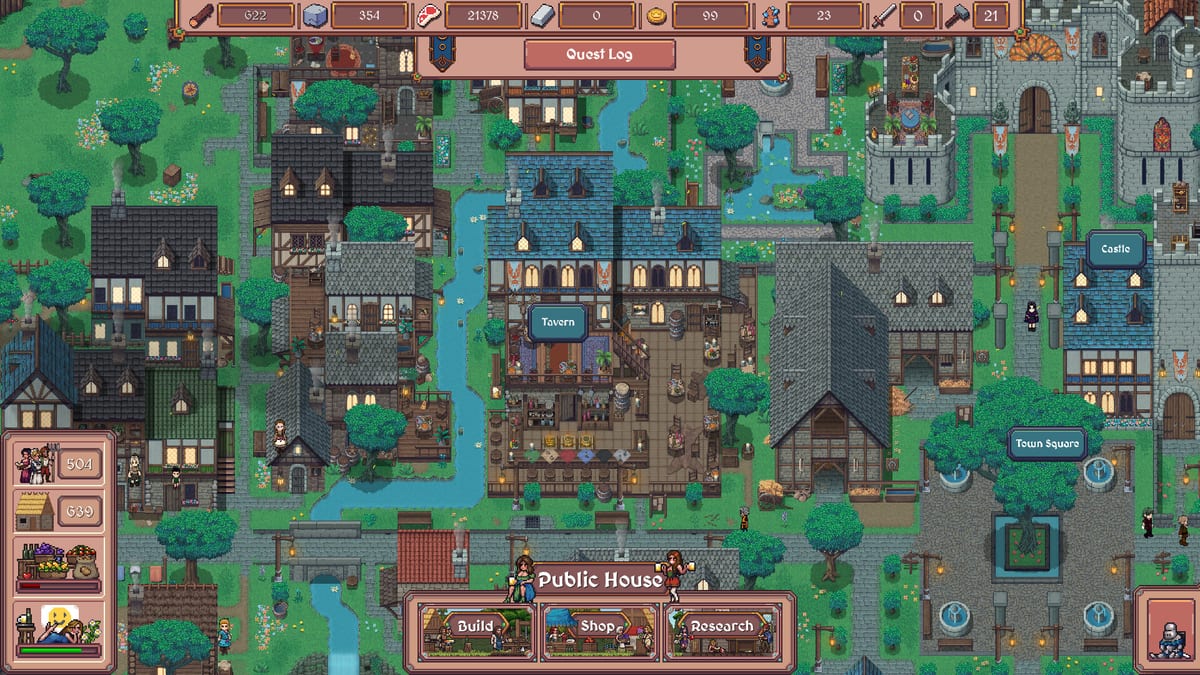
Resources are the heartbeat of Hearth and Hamlet. Official materials call out food, wood, stone, and gold as the everyday gathering loop, with magic arriving as your city advances. This page explains how those stockpiles behave in practice on the shipped Steam build, with demo notes where they still help. The full game released on August 19, 2026 on Windows and Linux via Steam—read this as a live economy guide that can still patch.
Pair this systems page with workers tiers, the worker planner, buildings, and research tiers. Resources only matter when workers, workplaces, storage, and policies agree.
Food — the soft fail state
Food keeps population healthy enough to grow. In incremental citybuilders, food is rarely the flashiest meter and almost always the one that ends a careless run. Symptoms of trouble:
- Stockpile trends down while you admire a new civic roof.
- Population growth stalls even though housing exists.
- Happiness dips after you assumed cozy meant immune to hunger.
What to do: staff fishing and other food buildings first (see buildings tiers), spend personal gather time on food during emergencies (controls), and delay gold pushes until the food line is boringly positive.
Food also interacts with happiness and raids. Hungry towns tolerate taxes poorly and recover from attacks slowly. If you plan a harsh policy package, over-produce food first.
Wood — the construction bloodstream
Wood appears in nearly every early recipe: tents, workshops, civic frames, and the scaffolding of ambition. When wood hits zero, the town visually freezes even if stone and gold look healthy.
Early rule: keep a woodcutter staffed before you promise yourself a masonry skyline. Mid rule: during build waves, temporarily swing workers from gold or specialty jobs back to timber. Storage rule: if wood production is high but the number never rises, you are capped—solve storage before hiring more lumberjacks.
Manual gathering can patch a shortfall for a minute; assigned wood crews win the hour.
Stone — the mid-game gate
Stone marks the transition from camp to town. Quarries, heavier civic buildings, guard infrastructure, and fortifications lean on masonry. Players who rush stone before food/wood stabilize create beautiful plans on empty stomachs. Players who ignore stone after the unlock list fills with masonry create the opposite problem: endless timber towns that cannot finish the next tier.
Read the unlock list: if the next three buildings all tax stone, promote quarry labor using the worker planner. Read the stockpile: if stone is maxed and nothing is building, you may lack builders, prerequisites, or research gates rather than miners.
Gold — upgrade fuel, not breakfast
Gold funds upgrades, taxation strategies, and trade dreams. It is also the easiest resource to over-prioritize because it feels like progress. In the demo, some players have reported friction around gold sinks and market expectations—treat gold buildings as amplifiers once surplus exists, not as your first survival plan.
Healthy gold play looks like:
- Food positive.
- Wood covering the construction queue.
- Stone available for the current tier.
- Then a modest gold crew or tax policy.
- Happiness monitored after every tax change.
Unhealthy gold play looks like empty granaries beside a gleaming coin count.
Magic — late spice with real opportunity cost
Magic is a headline feature: academies, alchemy, and wild new systems that change how a kingdom operates. In resource terms, magic is a gated economy. It consumes attention, research, and often specialized buildings that could have been another quarry or tavern.
Prioritize magic when:
- Core four resources are stable.
- Storage is not constantly clipping you.
- Defense and happiness are not on fire.
- Research has actually opened the branch.
Until then, let magic be a goalpost, not a panic button.
Storage — the invisible fifth resource
Storage deserves its own mental slot. Production workers do nothing useful when stockpiles sit at the ceiling. Caps turn efficient towns into placebo towns: everyone is busy, nothing accumulates, and new buildings never become affordable because you cannot bank the cost.
Storage checklist:
- Are you at cap on food while still staffing max food jobs? Move labor or raise caps.
- Are you at cap on wood while a build costs stone? You do not need more woodcutters today.
- Are gold upgrades invisible because coin is capped? Expand storage or spend intentionally.
- Did a demo patch change pacing? Reassess caps after demo polish lands.
Research and buildings that raise stockpile limits are often higher value than another raw production node—see research tiers.
Bottleneck diagnosis table
| Symptom | Likely cause | First fix |
|---|---|---|
| Population stalls | Food or housing | Staff food; build tents |
| Buildings will not start | Wood or stone short | Swing workers; check quarry |
| Numbers stuck at round max | Storage cap | Unlock storage tech/buildings |
| Upgrades unaffordable | Gold + happiness | Small gold crew; ease taxes |
| Workers lost to threats | Raids | Guard house + drafts |
| Everything feels slow | Wrong research order | Follow research tiers |
Interaction with policies and raids
Taxation can mint gold while taxing happiness. Worker rules can protect morale at the cost of raw output. Guard drafts convert producers into defenders. Each policy is a resource decision in disguise—detail on policies. Raids are resource decisions too: every lost gatherer is lost food and wood you must rebuild.
Trade extends local shortages by importing what your terrain lacks, but only if you export from surplus. Exporting from deficit is how cozy kingdoms cosplay as disasters.
Practical early stockpile targets (qualitative)
Exact numbers shift with demo balance, so use qualitative targets:
- Food: rising, with a buffer before any tax experiment.
- Wood: never zero during a construction queue.
- Stone: banking ahead of the next masonry unlock.
- Gold: enough for the next planned upgrade, not infinite hoarding.
- Magic: optional until mid/late demo goals.
Pre-launch note
Practice these loops in the demo, verify your machine on system requirements, and track the release date. When the full single-player release unlocks on August 19, 2026, expect deeper sinks and possibly new resources tied to trade and magic. The diagnostic habits on this page—read the trend, check the cap, reassign the swing crew—should still apply.
For allocation priorities rather than definitions, continue to workers and the worker planner. For what consumes these resources, keep buildings open beside your construction queue.
Frequently Asked Questions
Quick answers to the most common questions.
Which resource should I prioritize first?
Food first, then wood. Stone and gold come once the camp can eat and build without constant emergencies.
Why did my production stop rising?
You are often hitting a storage cap. Raise stockpile limits or spend down the capped resource before hiring more workers.
When does magic become important?
After food, wood, stone, gold, happiness, and basic defense are stable and research has opened magical buildings.
Does gold replace food if I tax hard?
No. Taxes can raise gold while hurting happiness. Hungry, unhappy towns still fail even with a full treasury.
Is this economy guide for the launched full game?
No. It is written for the shipped campaign, with demo notes where they still help, after the August 19, 2026 Steam release.