Hearth and Hamlet Buildings Overview
From tents and fishing huts to guard houses, fortifications, and academies.
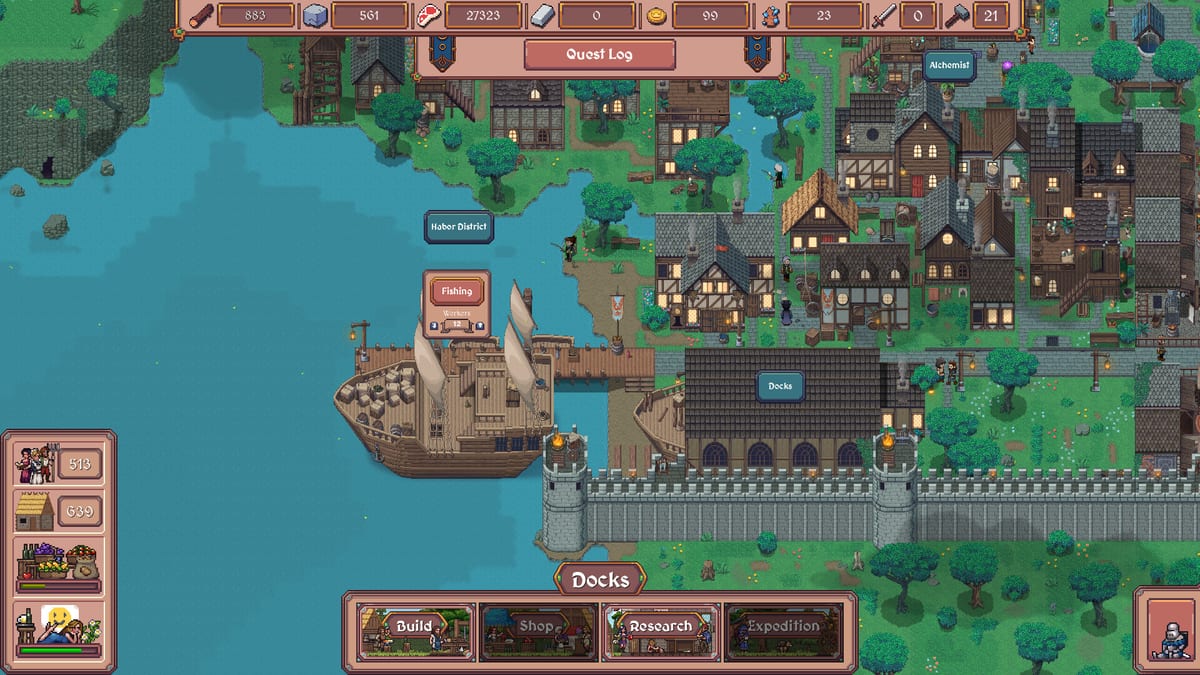
Buildings are how a campfire becomes a kingdom in Hearth and Hamlet. The Steam page promises a deep construction ladder—simple tents to taverns, castles, magical academies, and defensive fortifications—inside a cozy incremental citybuilder. This overview explains building types and roles for the shipped campaign and leftover demo practice. The full release unlocked on August 19, 2026; availability of every late structure can still differ between demo memory and the live SKU.
For unlock priority, use the buildings tier list. For staffing, use workers and the worker planner. For costs and bottlenecks, keep resources nearby.
Housing: tents and early shelters
Tents and other humble shelters are the population on-ramp. Without beds, gather rates stay stuck no matter how clever your research queue looks. Build housing whenever growth stalls, then immediately assign new citizens so tents do not become decorative empty rooms.
Housing also pressures food. Every new sleeper is a future mouth. Expand tents in step with fishing and other food buildings rather than in a single vanity spike.
Food production: fishing and related huts
Fishing represents the early food pillar called out across marketing and gameplay coverage. Food buildings convert worker time into the stockpile that keeps happiness and growth alive. Rank them ahead of prestige roofs whenever the food trend line bends down.
As the settlement matures, additional food structures may appear through research. Treat each new food building as insurance before you open aggressive tax policies.
Raw materials: woodcutter and quarry
Woodcutter
The woodcutter automates the timber that early construction drinks constantly. Pair it with personal hold-to-gather only as a bridge (controls). A town with a silent woodcutter and a busy quarry will still fail to place the next tent frame.
Quarry
The quarry unlocks the masonry half of mid progression. Stone funds heavier civic halls, guard infrastructure, and fortifications. Build the quarry when your unlock list stops being sticks-and-canvas and starts being stone-priced—then staff it before you promise walls to nobody.
Civic leadership: public house and chief house
Public house
The public house is a civic and social anchor. It supports the feeling of a real hamlet rather than a pure resource camp and often ties into happiness and community throughput. Raise it once food and wood are stable so morale tools exist before tax experiments begin.
Chief house
The chief house (leader’s hut / manor language varies by update copy) is the leadership center. Demo polish has pointed players toward advisor-style research and quality-of-life unlocks behind leadership buildings. Practically, the chief house turns “I have a camp” into “I can legislate and specialize.” Do not rush it while starving; do not delay it forever once production is calm.
Defense: guard house and fortifications
Guard house
The guard house is the workplace half of raid readiness. Policies can draft city guards, but drafts need somewhere to matter. Build the guard house as threat pressure rises, then move workers deliberately—see workers tiers.
Fortifications
Fortifications (walls, towers, and related defensive construction) protect the investment you already made. They are stone-hungry and tempting to overbuild. Fortify enough to survive raids; do not brick your entire quarry output into walls while housing and food still need upgrades.
Happiness and social: tavern
The tavern is the classic happiness multiplier building. In a systems sense it converts surplus population and resources into morale that boosts wider production. It shines in mid demo when taxes, crowding, or draft policies start biting. Building a tavern before the first woodcutter is usually wrong; building one after a happiness crash is usually right.
Magic and knowledge: academies (and alchemy)
Magical academies—and related alchemy labs called out in storefront features—are the fantasy ceiling of the building tree. They add new dimensions once research opens magic. Treat them as mid-to-late goals during the demo: exciting, expensive in opportunity cost, and dependent on a settlement that already understands storage and defense.
The August 19, 2026 full release is likely to expand this ladder. Practice the mundane campus first so launch-day academies do not inherit a broken food line.
How buildings unlock through research
Many advanced structures are gated behind the research tree. That means a building page is incomplete without a research plan:
- Identify the role you need (food, wood, stone, civic, defense, magic).
- Check whether research must unlock it.
- Confirm you can pay resources and staff workers.
- Place the building, then immediately assign labor.
- Only then chase the next prestige unlock.
Role summary table
| Building | Primary role | When it matters |
|---|---|---|
| Tent / shelter | Population capacity | Always early |
| Fishing / food hut | Food income | Always early |
| Woodcutter | Wood income | Always early |
| Quarry | Stone income | Mid demo |
| Public house | Civic / happiness support | After basics |
| Chief house | Leadership / policy / advisor gates | After basics |
| Guard house | Defense workplace | When threats rise |
| Tavern | Happiness amplifier | Mid pressure |
| Fortifications | Raid protection | After first threats |
| Academy / alchemy | Magic systems | Late demo goals |
Castles, shops, and other storefront promises
Marketing also mentions shops, banks, churches, castles, and trade-facing structures. Some appear in demo slices; others are fuller-release fantasies. When you meet them:
- Shops / markets — economy amplifiers; verify they actually move gold before over-investing.
- Banks / counting structures — gold logistics; still secondary to food.
- Churches / civic specialty — often happiness or policy adjacent.
- Castles — prestige and late defense statements, not day-one goals.
If a building’s shop interface looks inactive in the demo, assume content limits or unmet prerequisites rather than a broken PC—and keep practicing the loops that clearly work.
Building in the single-player cozy loop
There is no multiplayer partner to cover your mistakes. Pause, reassign, and rebuild. Use Shift+F11 when you want to screenshot a clean skyline after a successful expansion wave. Check system requirements if larger towns stutter on older GPUs.
Related reading
- Priority decisions: Buildings tier list
- Laws that change building value: Policies
- Launch timing: Release date · Launch checklist
Construct with intention: every roof should answer a bottleneck. That is how tents become hamlets, and how hamlets earn the right to dream about academies before the planned August 19, 2026 unlock.
Frequently Asked Questions
Quick answers to the most common questions.
What buildings should I place first?
Housing and food, then a woodcutter. Civic halls and quarries follow once those loops are stable.
What does the chief house do?
It acts as a leadership center that supports policies and, in demo polish notes, advisor-style quality-of-life research.
When should I build fortifications?
After basic production exists and raids or wildlife pressure make soft settlements costly to leave exposed.
Are academies available immediately?
Usually not. Magical academies are mid-to-late goals gated by research and a stable resource base.
Where is unlock priority ranked?
See the buildings tier list for S–D priority during early and mid demo progression.