Hearth and Hamlet Demo Guide
Play the sample the right way — learn the loop without mistaking it for the full campaign.
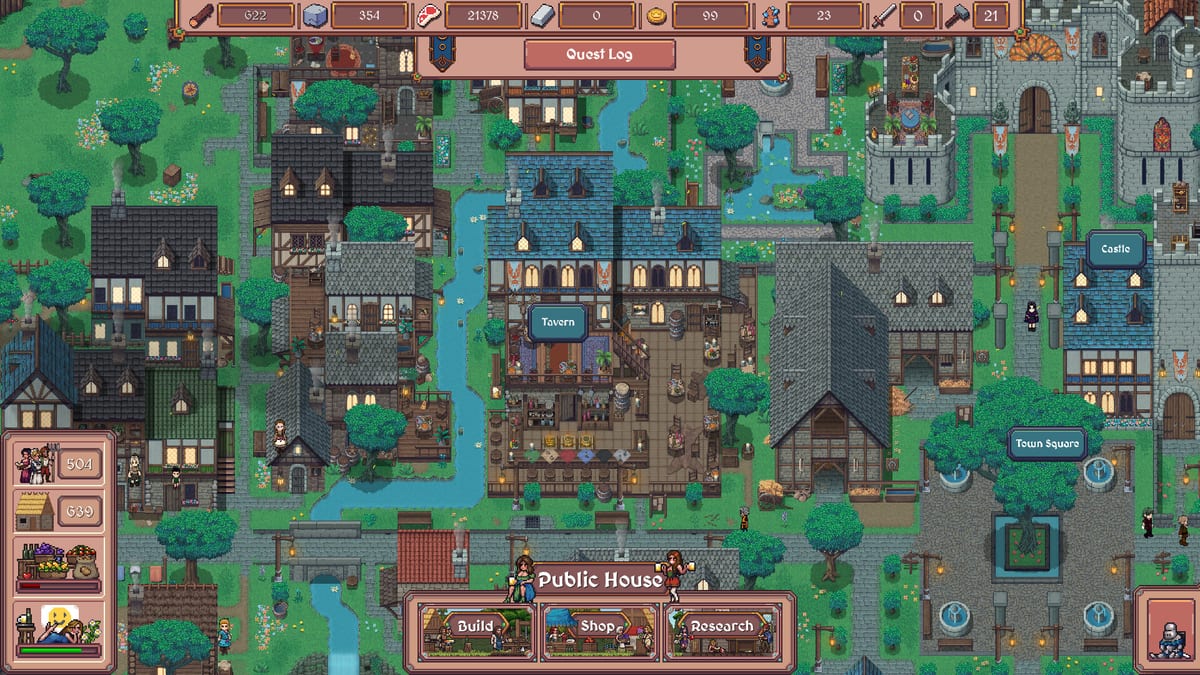
This Demo Guide helps you get value from the Hearth and Hamlet Steam demo without confusing it for the full campaign. The complete game released on August 19, 2026 on Windows and SteamOS/Linux, and it remains single-player. The demo is still the best free hands-on sample of the cozy incremental citybuilder loop.
If you have not oriented yet, skim Getting Started and How to Play first. For calendar and price, see Out Now and Release Date. For a launch-week impression piece, read Launch Review after you have played.
What the demo is for
The demo exists to answer a few honest questions:
- Do you enjoy campfire-to-kingdom pacing?
- Does worker assignment feel satisfying once clicking becomes optional?
- Are you interested in research, policies, trade, and light defense as long-term goals?
- Does the pixel-art presentation and idle rhythm match your chill-session taste?
It is not a promise that every building, cost, raid timer, or magic unlock you see will match the live campaign. Incremental games often tune curves hard between demo slices and hotfixes.
What you should practice in the demo
1) Bootstrap gathering
Learn early gather inputs — click / hold LMB or Space — until workers take over. Confirm bindings on Controls. Your success metric is not clicks per minute; it is how quickly you stop needing them.
2) Food and wood discipline
Treat food and wood as the twin pillars. Food supports population; wood funds construction. If either crashes, pause vanity goals. Use Resources if stockpile behavior is unclear, and run a structured hour with Early Game.
3) First specialist jobs
Fishing and woodcutting (and other early roles the demo exposes) teach the real strategy: assignment. Move people deliberately. Leave a note of ratios that felt good — they make launch day faster even if absolute numbers change.
4) Research curiosity
Push the research tree far enough to feel permanent progress. Notice which unlocks open buildings, policies, or magic-flavored systems. Do not hoard forever waiting for a perfect node while production idles poorly.
5) Peek at later layers
If the demo lets you touch policies, trade, magic, or guards, take the tutorial-level contact and then stop forcing completionism. Dedicated guides for later systems live at Trade, Magic, and Defend Raids.
Demo expectations vs full game (after August 19, 2026)
| Topic | Demo expectation | Full-game expectation |
|---|---|---|
| Availability | Playable now as a free sample | Unlocked August 19, 2026 |
| Content depth | Partial arc / teaching slice | Broader buildings, research, policies, trade, magic, defense, 24 achievements |
| Balance | Provisional | Live SKU; still patchable |
| Reviews | Not a final score | Launch-week Very Positive user scores exist |
| Multiplayer | None | Still single-player only |
Never describe the demo as the complete edition. Buy on Steam if you like the sample; start a fresh full-game save rather than dragging an old demo kingdom forward.
A sensible demo session plan (60–90 minutes)
- 0–10 min — Learn gather inputs; stock starter food and wood.
- 10–25 min — Hire workers; assign fishing / woodcutting; stop over-clicking.
- 25–45 min — Build capacity and workplaces; keep surplus.
- 45–70 min — Unlock research that multiplies your current bottleneck.
- 70–90 min — Touch one “next layer” system (policy, trade, magic, or defense) if available, then write three notes: what felt great, what felt opaque, what you want on day-one launch.
That plan is enough to decide a purchase. You do not need to “finish” the demo like a campaign.
Common demo misunderstandings
- “The demo is unfinished, so the genre is broken.” Demos are slices. Judge the loop, not missing late castles.
- “I must optimize for leaderboard meta.” There is no multiplayer ladder here. Optimize for your calm pace.
- “Trailer buildings missing means false advertising.” Many citybuilders gate spectacle behind research. Check whether the systems exist as goals, not whether every asset appears in hour one.
- “I’ll wait for codes.” Do not. This wiki will not invent codes or scripts.
- “I’ll review it as a 10/10 final from the demo.” Use Launch Review language: shipped-build impressions, not a Metacritic clone.
How demo notes transfer to launch day
Keep a tiny notebook:
- Preferred early worker split (food vs wood).
- Which research unlock felt like a spike in fun.
- Whether you prefer active rebalancing or idle watching.
- When you first wanted trade or magic.
- Whether raid pressure (if present) felt fair.
On a fresh full-game save, replay the opener with Early Game and re-validate costs. Your habits transfer even when spreadsheet cells do not.
Related pages to open while you demo
- Getting Started — orientation
- How to Play — full loop language
- Early Game — first-hour execution
- Out Now — first-week facts
- Launch Review — shipped-build impressions
- Systems: Resources, Controls, Buildings
Bottom line
Play the demo to learn whether Hearth and Hamlet’s cozy incremental kingdom fantasy fits your brain. Practice gather → workers → buildings → research, and peek at policies, trade, magic, and guards if the slice allows. Keep expectations honest for the shipped August 19, 2026 campaign, stay single-player focused, and come back to this wiki when the hearth becomes a full hamlet.
Frequently Asked Questions
Quick answers to the most common questions.
Is the Hearth and Hamlet demo the full game?
No. It is a free sample. The full Steam release unlocked on August 19, 2026, and demo values may still differ.
What should I focus on in the demo?
Learn gathering inputs, stabilize food and wood, assign early workers, and push research far enough to feel permanent progression.
Where can I check the release timing?
See the Release Date page on this wiki and the official Steam store entry for app 4315040.
Can I treat a demo write-up as a final review?
No. Use the Launch Review page as a shipped-build impression, not a numeric Metacritic clone of the demo slice.
Will my demo strategy still work at launch?
Core habits should transfer, but re-check costs and unlock order after August 19, 2026 patches.