How to Play Hearth and Hamlet
The full cozy loop — from clicker gathering to a governed kingdom.
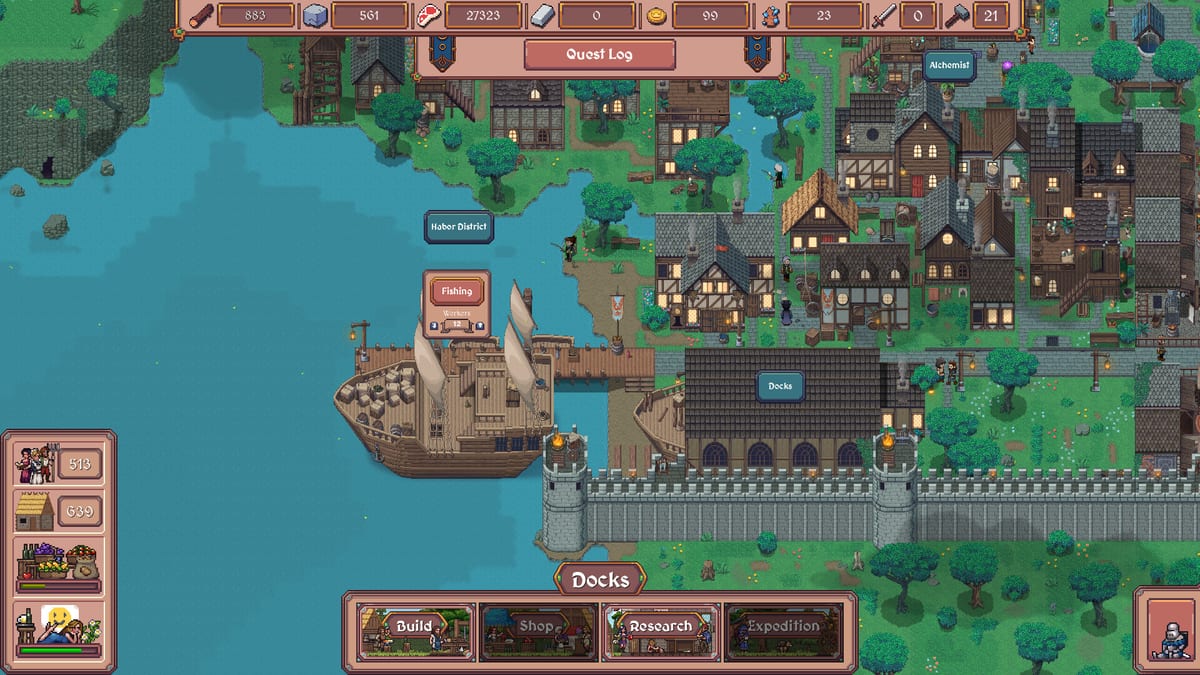
This How to Play guide explains the core loop of Hearth and Hamlet, the cozy incremental citybuilder planned for Steam on August 19, 2026. Platforms are Windows and SteamOS/Linux; the game is single-player only. A demo exists so you can practice before launch — treat demo numbers as provisional.
If you want a softer onboarding checklist first, skim Getting Started. If you want a timed first-hour plan, jump to Early Game after this page. For input details, keep Controls nearby.
The core loop at a glance
Official materials describe a satisfying cycle:
- Gather resources (food, wood, stone, gold, and later magical resources).
- Hire and assign workers so production continues without constant clicking.
- Construct buildings that add capacity, jobs, and new systems.
- Research technologies that permanently unlock advanced options.
- Set policies that shape taxation, worker rules, happiness, and civic character.
- Trade with faraway lands and explore magic (alchemy labs, magic academies).
- Train guards and fortify so raids and threats do not erase progress.
You can play actively — rebalancing workers every few minutes — or lean idle once assignments look healthy. Both approaches are intended.
Phase 1 — Manual gathering
Early settlements ask you to participate directly. Click or hold LMB, or use Space, to gather while the camp is too small for full automation. Your goals in this phase are simple:
- Produce enough food to support population.
- Stock wood for tents, workplaces, and early upgrades.
- Learn which nodes or actions feed which stockpiles (see Resources).
Do not romanticize endless clicking. The moment workers become available, shift labor onto them. Manual input is a bootstrap, not the endgame fantasy.
Phase 2 — Workers and automation
Workers turn Hearth and Hamlet into a true incremental citybuilder. Assign people to roles such as fishing, woodcutting, and other jobs unlocked by buildings and research. Good habits:
- Feed growth first — starving expansion creates churn.
- Keep a wood buffer — construction pauses feel worse than slightly slower food.
- Rebalance after every major unlock — a new building often needs a new specialist ratio.
- Watch happiness signals — policies and amenities matter more as the hamlet densifies.
When you are unsure why a stockpile stalls, open Resources and compare production jobs versus consumption from buildings and population.
Phase 3 — Buildings as multipliers
Buildings are not only cosmetics. They expand storage, unlock jobs, improve throughput, and eventually enable taverns, markets, fortifications, castles, alchemy labs, and magic academies. A healthy rule: build the structure that removes your current bottleneck, not the one that looks grand in a trailer.
Cross-check names and roles on Buildings. Pair construction with research so you are not stuck staring at a locked advanced node.
Phase 4 — Research as permanent progress
Research is the long spine of the campaign. Technologies permanently unlock new buildings, policies, magic experiments, and quality-of-life upgrades. Prefer unlocks that:
- multiply a resource you already gather,
- open a new job that solves a shortage,
- or enable the next governance / trade / magic layer.
Avoid saving every resource for a single late node while your food economy collapses. Incremental games reward chaining small permanent gains.
Phase 5 — Policies, happiness, and kingdom character
As the settlement grows, management becomes as important as expansion. Policies can include taxation for income, worker rules for morale, guard drafts for protection, and civic choices that change how the kingdom feels. Happiness is not flavor text — low morale can undermine the cozy idle fantasy by slowing the very growth you optimized.
When laws unlock, browse Policies and change one lever at a time so you can see the effect. Pair policy work with amenities (for example taverns) rather than stacking tax without relief.
Phase 6 — Trade and magic
Local terrain will not supply everything forever. Trade with faraway lands lets you grow gold and exotic goods beyond what fishing and woodcutting provide. Magic — through alchemy labs and magic academies — adds another dimension to buffs, experimentation, and late identity. Dedicated walkthroughs live at Trade and Magic.
Open these systems when your basic loop is stable. Trading while starving wastes caravans; casting while your woodpile is empty wastes research investment.
Phase 7 — Guards versus raids
Cozy does not mean zero stakes. Occasional raider or monster pressure asks you to recruit soldiers / city guards and raise defensive fortifications. Learn the defensive toolkit in Defend Raids before the first attack feels like a difficulty spike. Guard drafts may also appear as policy choices — coordinate military recruitment with happiness so defense does not hollow out your workforce.
Demo gameplay vs full release
The embedded video above is demo gameplay context for learning the loop visually. The full game is still upcoming on August 19, 2026. Features shown in trailers or the demo may be paced differently at launch. For expectation-setting, read the Demo Guide and the labeled Preview / Review (preview, not a final review).
Practical “am I playing correctly?” checklist
- Food is trending up or stable with population growth.
- Wood covers the next two buildings you care about.
- Workers are assigned (not idle in the wrong sense).
- A research unlock is always “in progress” or freshly chosen.
- You know where policies, trade, magic, and guards appear even if you have not opened them yet.
- You are not waiting for multiplayer features that do not exist.
Where to go next
- New to the campfire? → Getting Started
- Want a timed opener? → Early Game
- On the demo specifically? → Demo Guide
- Systems references → Resources, Controls, Buildings
Play at your pace. The kingdom is designed to feel good whether you optimize spreadsheets or simply enjoy watching the pixel hamlet breathe.
Frequently Asked Questions
Quick answers to the most common questions.
What is the core loop of Hearth and Hamlet?
Gather resources, hire workers, construct buildings, research technologies, set policies for happiness and income, trade and use magic, then train guards against raids.
Should I keep clicking after I have workers?
Use early click/hold or Space gathering to bootstrap, then prioritize worker assignments. Planning and research matter more than endless manual clicks.
When do trade and magic matter?
After food, wood, and basic automation are stable. Trade extends the economy beyond local terrain; magic adds alchemy and academy-style systems.
Is this guide for the demo or the full game?
Both. The loop matches official descriptions, but demo values may differ from the August 19, 2026 release. Re-check numbers in your build.
Does How to Play cover multiplayer?
No. The game is single-player only on Windows and SteamOS/Linux.